Roof financing: loans, payment plans and roofers that offer financing
The main ways to finance a roof are contractor financing, a personal loan, and a home equity loan or HELOC. Government-backed options include FHA Title I property improvement loans and, for eligible rural homeowners, USDA Section 504 repair loans at 1%. Compare the total cost, not just the monthly payment, and get your roof quote first.
- Monthly payments. Spread the cost into manageable monthly amounts.
- Promo rates. Some contractors offer 0% or deferred-interest plans.
- Protect your home now. Don’t delay urgent work waiting to save up.
Get free roof financing quotes
Compare up to 4 independent local roofers. Takes 2 minutes.
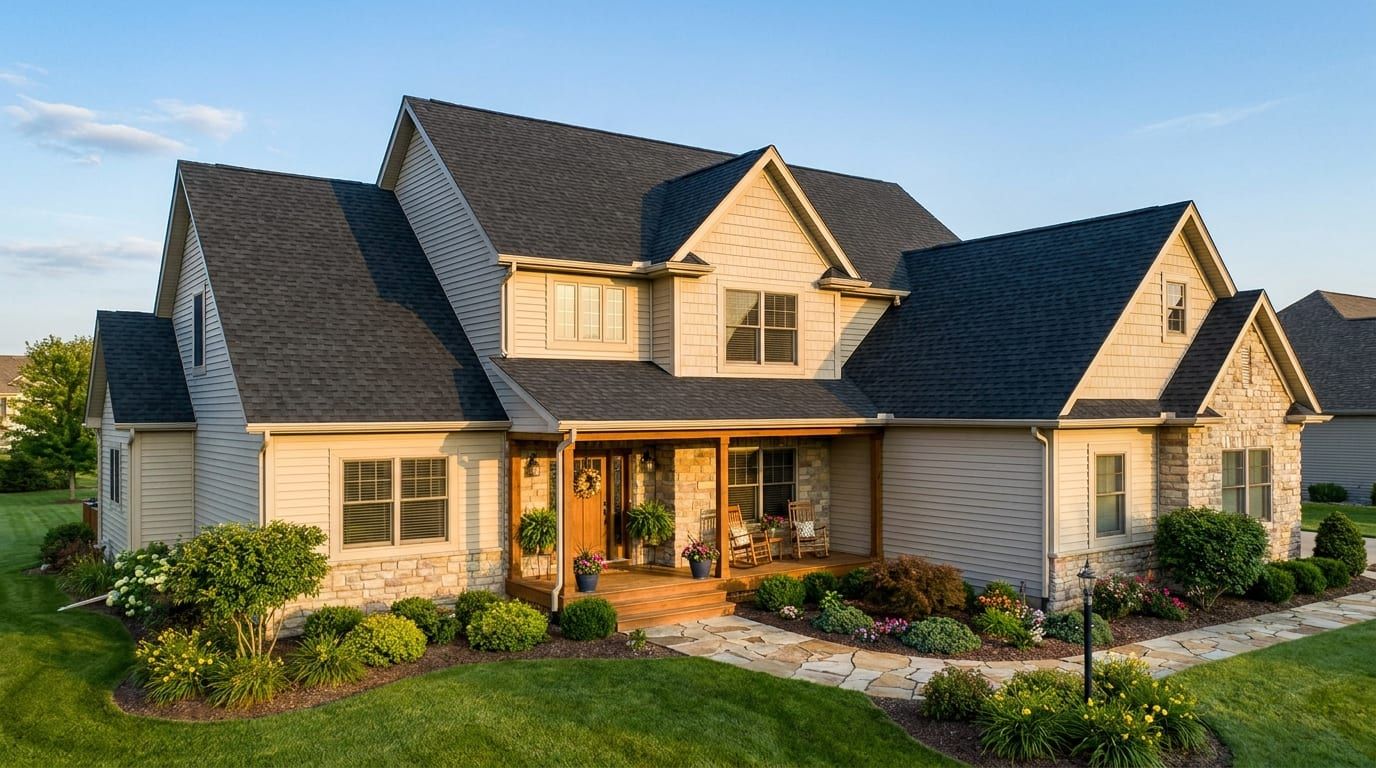
A new roof is a large bill, and it rarely arrives at a convenient time. You have several ways to spread the cost, from a contractor’s payment plan to government-insured loans, but the lowest monthly payment is not always the cheapest loan.
Price the roof first, then the money. Get matched with local roofers, including ones that offer financing, compare the project quotes, then compare loan offers for the same amount. Looking for grants or help paying? See roof replacement assistance programs. For ways to bring the price itself down, see affordable roofing.
Roof financing options compared
Each option trades off rate, speed, paperwork and what you put up as collateral:
- Contractor financing: arranged by the roofer through a partner lender, sometimes with 0% or deferred-interest promotions. Collateral: depends on the lender, so ask whether a lien will be filed on your home. Best for: speed and convenience, if you read every term.
- Personal loan: a loan from a bank, credit union or online lender with a fixed rate and fixed monthly payments. Rates depend heavily on your credit; the Federal Reserve reported an average of 11.86% on 24-month personal loans at commercial banks in the second quarter of 2026. Collateral: none. Best for: good credit, smaller jobs, or little home equity.
- Home equity loan or HELOC: borrows against your home’s equity. A home equity loan is a lump sum, usually at a fixed rate. A HELOC is a credit line with a draw period, often around 10 years, and usually a variable rate. Collateral: your home, which you can lose if you do not repay. Best for: owners with equity who want a longer repayment term.
- FHA Title I property improvement loan: made by HUD-approved lenders and insured by FHA, with a fixed rate and no prepayment penalty. HUD’s published limits are $25,000 for a single-family home with terms up to 20 years, and loans over $7,500 must be secured by the property. The 21st Century ROAD to Housing Act (Public Law 119-101, signed July 11, 2026, section 303) raised the statutory limit to $75,000 and lets HUD set terms of up to 30 years, so ask a Title I lender what it currently offers. Best for: owners with little equity.
- USDA Section 504 Home Repair: direct loans up to $40,000 at a fixed 1% for 20 years, plus grants up to $10,000 for homeowners 62 and older. You must own and live in the home, be in an eligible rural area, meet USDA income limits, and be unable to get affordable credit elsewhere. Best for: lower-income rural homeowners.
- Homeowners insurance claim: pays for sudden damage from storms, hail, wind or fallen trees, minus your deductible, but not for a roof that is simply old or worn out. Collateral: none. Best for: storm damage. See does insurance cover roof replacement?
Credit cards are a last resort for small repairs: the Federal Reserve’s data put the average rate on card accounts charged interest at about 22% in the second quarter of 2026.
Can you get roof financing with bad credit?
Yes, but expect fewer choices and higher rates, so the total cost matters even more. Options that lean less on a high score:
- USDA Section 504, if you qualify: it exists for lower-income rural homeowners who cannot get affordable credit elsewhere.
- An FHA Title I loan: the lender still reviews your credit, but loans of $7,500 or less do not have to be secured by your home.
- A home equity loan or HELOC, if you have equity: the home secures the debt, but you risk the home if you fall behind.
- A co-signer with stronger credit on a personal loan.
- An insurance claim, if a storm caused the damage. No credit check is involved.
- Contractor financing programs, some of which accept lower scores at higher rates or with added fees. Read the terms closely.
Before you borrow at a high rate, ask whether a roof repair or restoration can buy you a few years, and check roof replacement assistance programs for grants. Be wary of any lender that guarantees approval or asks for fees before you are approved.
What a roof loan really costs
The rate and the term decide how much you pay in total. These examples assume a $10,000 roof, close to the national average for an asphalt shingle replacement, and a fixed rate with equal monthly payments. They are illustrations, not offers:
- 12% APR for 5 years (close to the Federal Reserve’s mid-2026 average for bank personal loans): about $222 a month, $3,347 in interest, $13,347 in total.
- 12% APR for 7 years: about $177 a month, but $4,828 in interest. The lower payment costs about $1,480 more.
- 30% APR for 5 years (an illustrative high-rate loan): about $324 a month, $9,412 in interest, $19,412 in total, nearly double the roof’s price.
- USDA Section 504 at 1% for 20 years, if you qualify: about $46 a month and about $1,037 in interest.
Fees change the math too. A “3.99% APR” loan with a 20% dealer fee built into the balance ($12,000 borrowed for a $10,000 roof) over 10 years costs about $14,572, the same as borrowing the $10,000 cash price at 7.99% with no fee. Estimate your own project with the roof cost calculator before you compare loans.
Roofing companies that offer financing: what to check
Many roofers offer financing through partner lenders, and it can be a good deal. Before you sign, get these in writing:
- The cash price. Ask whether the price changes if you pay cash or bring your own lender. In its 2024 review of solar loans, the Consumer Financial Protection Bureau found “dealer fees” built into loan balances that typically added 10% to 30% to the cash price, often without showing up in the APR.
- Whether a 0% offer is true 0% or deferred interest. With deferred interest, if any balance remains when the promotion ends, you are charged interest back to the date of purchase.
- The APR, the term, the monthly payment and the total of all payments.
- Prepayment penalties, late fees, and whether a lien will be recorded against your home.
- The name of the lender, so you can check the loan terms with the lender directly.
Then compare that offer with a personal loan or home equity quote for the same amount. Our quote form can match you with local roofers, including ones that offer financing, and you can browse pros by state on roofers near me.
How Roof Restore Buddy works
Three steps to compare local roofers, with no pressure and no cost to you.
- 1
Tell us about your roof
Answer a few quick questions about your project and ZIP code. Takes under 2 minutes.
- 2
Get matched with local pros
We share your request with up to 4 independent roofing contractors who serve your area.
- 3
Compare free quotes
Compare quotes and reviews side by side, then choose the roofer that’s right for you. No obligation.
Roof Financing, frequently asked questions
Can you finance a new roof?
Yes. You can use contractor financing, a personal loan, a home equity loan or HELOC, an FHA Title I property improvement loan, or, if you are eligible, a USDA Section 504 repair loan. Storm damage may also be covered by your homeowners insurance. Compare offers for the same amount and term.
Is it hard to get approved for roof financing?
Not usually with fair or good credit. Contractor programs and personal lenders often decide quickly, while home equity loans take longer because the home has to be valued. With poor credit, approval is harder and rates are higher, so look at USDA Section 504, FHA Title I, a co-signer, or a smaller repair first.
What credit score do you need to finance a roof?
There is no single cutoff. Each lender sets its own standards, and the lowest rates and 0% promotions go to borrowers with strong credit. Lower scores can still qualify with some lenders, at higher rates, so compare the total cost of each offer.
Is it better to finance or pay cash for a roof?
Paying cash avoids interest, but financing lets you address urgent roof problems immediately and preserve savings. If you qualify for a 0% or low-rate plan, financing can make sense even if you could pay cash.
Can I get a tax credit for replacing my roof?
Generally no. The federal Energy Efficient Home Improvement Credit did not list roofing among its qualifying improvements, and it does not apply to property placed in service after December 31, 2025. Check with your state and your utility for any local programs.
Are there grants to help pay for a new roof?
A few. USDA Section 504 offers grants of up to $10,000 to homeowners 62 and older in eligible rural areas who meet very-low income limits, and a grant must be repaid if you sell within three years. State and local housing agencies may run other repair programs. See roof replacement assistance programs.
Related services
Roof Replacement
A full tear-off and new roof installation, with quotes from independent contractors in your area.
Learn moreMetal Roofing
Long-lasting, energy-efficient metal roofs. Get matched with experienced metal roofing installers.
Learn moreRoof Restoration
Clean, repair, and recoat a sound roof to extend its life, often for a third to a half of replacement cost.
Learn moreReady to restore your roof?
Get matched with trusted local roofers and compare free quotes in minutes.