Storm, hail and wind damage roof repair
Storm damage repairs often fall in the typical $400 to $1,800 roof repair range, while widespread hail or wind damage can mean a full replacement. Homeowners insurance usually covers sudden storm damage minus your deductible. Photograph the damage, report it promptly, and we’ll match you with up to 4 local roofers to inspect it.
- Insurance documentation. Get the photos and reports adjusters look for.
- Emergency tarping. Stop active leaks fast to prevent further damage.
- Claim guidance. Work with pros who understand the claims process.
Get free storm damage repair quotes
Compare up to 4 independent local roofers. Takes 2 minutes.
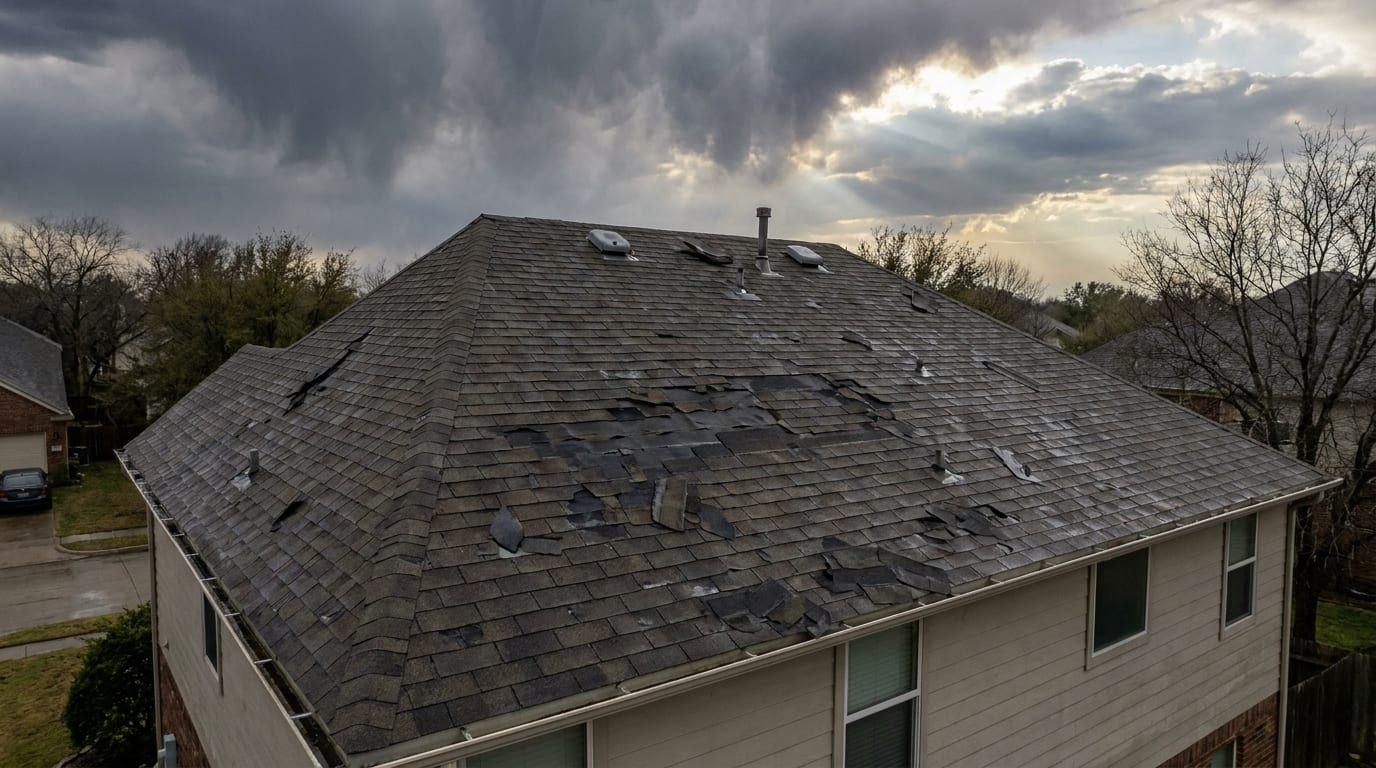
After a major storm, fast action protects your home and your insurance claim. Hail and high winds can lift shingles, crack tiles, dent metal, and create leaks that aren’t obvious from the ground. Roof Restore Buddy matches you with roofers near you who are experienced in storm damage and insurance documentation.
A claim-savvy contractor can inspect your roof, photograph the damage, and help you understand your options before the next rain causes more harm.
What to do after storm damage
After a storm, take these steps:
- Stay safe and photograph the damage from the ground, including dents on gutters, siding and cars
- Cover any opening with a tarp to prevent further damage, and keep the receipts
- Get a professional roof inspection to find damage you can’t see from the ground
- Report the claim to your insurer promptly, as most policies have deadlines
- Get a detailed repair estimate from a licensed local roofer
If water is already coming inside, start with emergency roof repair. Most storm repairs then fall in the typical roof repair range; see our roof repair cost guide for prices by type of repair, or the roof replacement cost guide if the damage is widespread.
For commercial or flat roofs, see commercial roof repair.
How to tell if wind damaged your roof
Missing shingles are the obvious sign, but wind damage often starts out subtle. One early clue is a thin horizontal line of missing granules about 1 to 2 inches below the shingle above: it means the shingle’s seal broke and it flapped against its neighbor in the wind. Also look for:
- Missing, torn or creased shingles, especially along roof edges
- Shingles that are loose or lifted at the bottom edge
- Bent or missing flashing, ridge caps or drip edge
- Debris on the roof and piles of granules at the downspouts
- New water stains on ceilings or in the attic
Check from the ground with binoculars rather than climbing up, and have a roofer confirm what you see.
What wind speeds damage shingles?
There is no single number: it depends on the shingle’s rating, its age, and how well it was installed. Manufacturers publish a wind warranty for each product. Owens Corning, for example, warrants its Supreme 3-tab shingle to 60 mph and its Duration architectural shingle to 130 mph with a standard four-nail installation, while CertainTeed warrants Landmark shingles to 110 mph, upgradable to 160 mph when its starter and hip-and-ridge products are used.
Shingles are also lab-tested: in the ASTM D3161 fan test, Class F (the top class) means they held at 110 mph for two hours, and in the ASTM D7158 uplift test, Class H is the top class. Real damage often starts below these numbers, through old seal strips, poorly placed nails, or roof edges, where IBHS notes damage often begins as wind gets underneath. If the wind was below your shingles’ warranted speed, ask the manufacturer about a warranty claim too.
Signs of hail damage
Hail usually hits a whole neighborhood, so dents on cars, gutters and siding are the first clue. On the roof, look for small round divots or bruises where granules are missing, cracked shingles, and a large pile of granules at a downspout (a little is normal on new shingles). Bruised shingles can crack and let water in over time, so get an inspection even when the roof looks fine from the ground.
If you replace the roof, ask about impact-resistant shingles rated UL 2218 Class 4, the top class in that impact test. Insurers in some states, including Texas, may offer a discount for an impact-resistant roof.
Hurricane-rated roofs: Florida HVHZ and FORTIFIED
Where hurricanes hit, the code and the product approval matter as much as the shingle. Florida’s strictest rules apply in the High-Velocity Hurricane Zone (HVHZ), which the Florida Building Code defines as Broward and Miami-Dade counties. Roofing products used there are typically approved through a Miami-Dade County Notice of Acceptance (NOA), so ask HVHZ roofers to show the NOA for the materials they quote.
Anywhere storms are common, ask about a FORTIFIED Roof, a voluntary standard from the Insurance Institute for Business & Home Safety (IBHS). It adds a sealed roof deck, ring-shank nails in a tighter pattern (which IBHS testing shows can double the uplift a roof withstands), and a stronger roof edge. An independent evaluator verifies the work, and the designation can qualify you for insurance discounts and, in some states such as Alabama, grants toward the upgrade.
Does insurance cover storm roof damage?
Homeowners insurance generally covers sudden storm, hail, and wind damage, minus your deductible. It does not cover damage from age or neglect. Documenting the storm date and damage clearly is the key to a smooth claim.
How much you receive depends on your policy. Replacement cost coverage pays to repair or replace the roof at today’s prices, while actual cash value coverage subtracts depreciation, which can leave you paying much more on an older roof. Wind can also be treated differently: on the Texas Gulf Coast, wind and hail are usually insured separately, and Florida policies typically carry a separate hurricane deductible. If a claim falls short, see roof financing, roof replacement assistance and affordable roofing options.
What to know about filing a roof insurance claim
A few habits make storm claims go more smoothly:
- Report it promptly. Deadlines vary; in Florida, notice of a property claim is due within 1 year of the date of loss, and a supplemental claim within 18 months
- Photograph the damage before any repairs, and make only temporary repairs until the adjuster has seen it; permanent repairs made first can get a claim denied
- Keep receipts for tarps, materials and emergency work
- Be there for the adjuster’s inspection, ideally with your roofer
- If the damage proves worse than the first estimate, ask the adjuster to revise it
Be wary of door-to-door storm chasers who offer to “handle” your claim. Our guides on how to spot a bad roofer and roof insurance claim and adjuster tips explain what to watch for.
How Roof Restore Buddy works
Three steps to compare local roofers, with no pressure and no cost to you.
- 1
Tell us about your roof
Answer a few quick questions about your project and ZIP code. Takes under 2 minutes.
- 2
Get matched with local pros
We share your request with up to 4 independent roofing contractors who serve your area.
- 3
Compare free quotes
Compare quotes and reviews side by side, then choose the roofer that’s right for you. No obligation.
Storm Damage Repair, frequently asked questions
What not to say to a roof insurance adjuster?
Avoid admitting fault, guessing at the age of your roof, saying the damage is “old” or pre-existing, or accepting the first estimate as final. Stick to the facts: when the storm happened and what damage you observed. Having your own licensed roofer present helps.
How long do I have to file a roof insurance claim?
It depends on your policy and state, so check your policy: some have a one-year deadline, and Florida law requires notice of a claim within 1 year of the date of loss. Report damage as soon as you can, because delays make it harder to show the storm caused it, and damage that worsens while you wait may not be covered.
Will filing a roof claim raise my insurance?
It can. Insurers look at your claims history, usually through a CLUE report that covers the last seven years, and a claim can cost you a claims-free discount. Some states limit this: Texas, for example, bars home insurers from charging you more for claims caused by weather. If the repair costs about the same as your deductible, paying out of pocket may make more sense.
What is the 25% rule for roofing?
It’s a Florida building code rule that often comes up after storms: if more than 25% of a roof section is repaired or replaced within 12 months, the whole section generally has to be replaced to current code. Florida law exempts roofs built to the 2007 Florida Building Code or later, so on newer roofs only the damaged part must meet current code. Outside Florida, ask your roofer what your local building department requires.
Will insurance replace a 20-year-old roof?
It can if the storm damage is covered, but the roof’s age affects the payout. Replacement cost coverage pays today’s price minus your deductible; actual cash value coverage subtracts depreciation first. Texas’s insurance regulator gives the example of a 10-year-old roof with a $10,000 replacement cost and an actual cash value of $7,000. Check which type your policy applies to the roof.
Can hail damage on a roof be repaired?
Yes, if it’s limited. Individual damaged shingles can be replaced, though new shingles may not match weathered ones exactly. When hail has bruised or cracked shingles across a whole slope, a roof replacement is usually the better fix. A roofer’s inspection, with photos, tells you which applies and supports your claim.
How can you tell if a storm roofer is lying about damage?
Ask for photos of the damage on your own roof, check their license where your state or city requires one, and get a second inspection before signing anything. Be wary of door knockers who arrive right after a storm, push you to sign the same day, or offer to waive your deductible. See how to spot a bad roofer.
Related services
Emergency Roof Repair
Active leaks and storm emergencies. Get matched with fast-response local roofers.
Learn moreRoof Inspection
A professional assessment of your roof’s condition. Many local pros offer it free.
Learn moreRoof Replacement
A full tear-off and new roof installation, with quotes from independent contractors in your area.
Learn moreReady to restore your roof?
Get matched with trusted local roofers and compare free quotes in minutes.