Metal roofing contractors near you: installers and costs
Metal roofing contractors install standing seam and exposed-fastener steel or aluminum roofs. Installed steel roofs usually run about $7 to $12 per square foot for exposed-fastener panels and $10 to $18 for standing seam, and a metal roof typically lasts 40 to 70 years. Compare free quotes from up to four local metal roofers below.
- Lasts 40–70 years. Two to three times the life of a typical asphalt roof.
- Energy efficient. Reflects solar heat and can lower cooling costs.
- Wind & fire resistant. A top choice in storm-, fire-, and snow-prone regions.
Get free metal roofing quotes
Compare up to 4 independent local roofers. Takes 2 minutes.
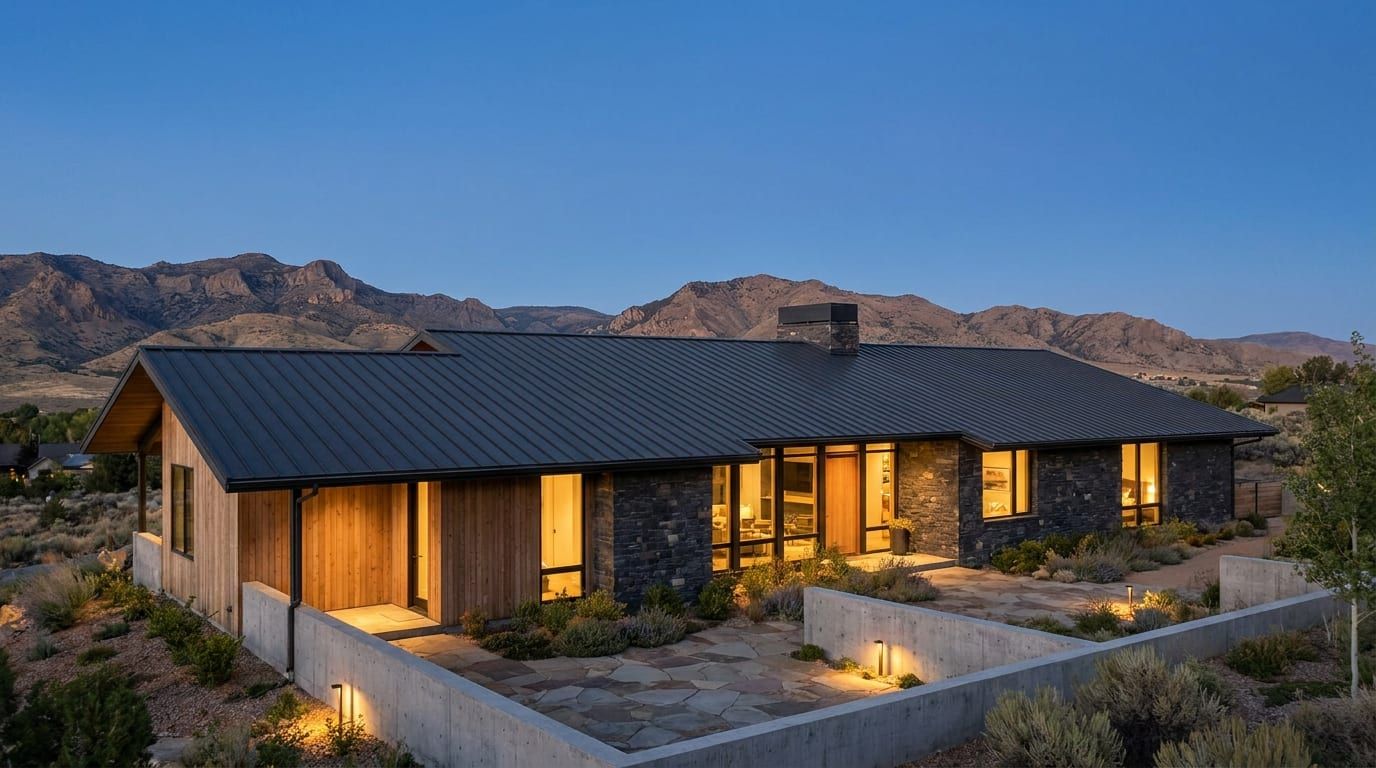
A metal roof is only as good as the crew that installs it. Panel layout, clips, fasteners, trim and flashing decide whether a metal roof stays quiet, flat and leak-free for decades. Roof Restore Buddy matches you with local roofers who install metal roofs, so you can compare quotes for the same scope side by side, for free.
Metal costs more upfront than asphalt shingles, but the Metal Roofing Alliance, an industry group, puts its lifespan at 40 to 70 years, two to three times longer than a typical asphalt roof. Still choosing a material? Read our metal roof vs shingles comparison. If you already want metal, the sections below cover the two main systems, the problems to plan for, and what to ask a metal roofer before you sign.
How to choose a metal roofing contractor
Fewer roofers install metal than asphalt, and metal is less forgiving of mistakes. Before you hire a metal roofer near you, check:
- Metal experience: ask how many metal roofs the crew installed in the past year, and which systems (standing seam, exposed-fastener, metal shingles).
- A state or local contractor license where your state requires one, plus proof of liability and workers’ compensation insurance.
- That panels will be fastened to the manufacturer’s installation instructions, which the International Residential Code requires for metal roof panels.
- A written scope that names the panel profile, metal gauge, paint finish, underlayment, trim and flashing details, and whether the old roof is torn off.
- Who pulls the permit, and what each warranty covers: the paint finish, the panels and the contractor’s workmanship are often separate warranties.
Get at least three quotes for the same scope. Our guide to choosing a roofer covers the questions to ask, and you can find local pros by state on our roofers near me page.
Standing seam vs exposed-fastener metal roofs
The main difference is where the screws go. Standing seam panels have raised vertical seams and are held down by concealed clips, so no fasteners pierce the face of the panel. Exposed-fastener panels (often called corrugated, ribbed or R-panel) are screwed straight through the panel into the roof, with a rubber washer sealing each screw.
- Price: exposed-fastener steel is the budget option at about $7 to $12 per square foot installed. Standing seam usually runs about $10 to $18, more for heavier gauges and premium paint finishes.
- Maintenance: the rubber washers on exposed fasteners break down with sun exposure over the years, so screws need periodic checks and eventual replacement. Standing seam has far fewer holes to maintain.
- Movement: metal expands and contracts with temperature. Standing seam clips are designed to let the panels move; through-fastened panels are pinned in place, which works against the screws over time.
- Slope: under the International Residential Code, standing seam can go on roofs as low as 1/4:12, while lapped exposed-fastener panels need at least 3:12, or 1/2:12 with lap sealant.
- Looks and uses: standing seam gives the clean, modern lines most homeowners picture. Exposed-fastener panels are common on barns, shops, porches and budget builds.
Metal shingles and stone-coated steel are a third option. They are stamped to look like asphalt shingles, shake, slate or tile, for homes where a traditional look matters.
Pricing metal for a warehouse, shop or other business building? See commercial standing seam and other commercial roof systems.
Biggest problems with metal roofs
Metal roofs hold up well, but they have trade-offs you should plan for before you buy:
- Upfront cost: metal costs more to install than asphalt shingles, so it pays off mainly if you stay in the home long enough to use its longer life.
- Noise: over solid decking and underlayment, rain on metal sounds little different from other roofs, according to the Metal Roofing Alliance. The loud “tin roof” sound comes from metal fastened over open framing, as on barns.
- Oil canning: visible waviness in the flat areas of panels. The Metal Construction Association describes it as an appearance issue that does not usually affect structural performance. An uneven deck, rough handling, the wrong clips and improper fastening all make it worse.
- Dents: hail, falling branches and wind-blown debris can dent or scratch metal without causing leaks, the Texas Department of Insurance notes, and how well a roof resists them depends on the metal type, panel thickness and coating.
- Expansion and fasteners: on exposed-fastener roofs, daily heating and cooling plus aging washers can loosen screws and open small leaks, so plan on periodic checks.
- Installer skill: fewer contractors are qualified to install standing seam, and trim and flashing mistakes are harder to fix later than on a shingle roof.
If your insurer offers a metal roof discount, read the conditions. Some policies exclude cosmetic hail damage, so dents that do not cause leaks are not covered.
How much does a metal roof cost?
Installed steel roofs usually cost about $7 to $18 per square foot of roof surface: roughly $7 to $12 for exposed-fastener panels and $10 to $18 for standing seam. On a roof with 2,000 square feet of surface, that is about $14,000 to $36,000, depending on the system, gauge, paint finish and tear-off. Copper and zinc cost far more.
For prices by panel type, metal and roof size, see our full metal roof cost guide, or estimate your project with the roof cost calculator. A metal roof can be financed like any other roof; see your roof financing options.
How Roof Restore Buddy works
Three steps to compare local roofers, with no pressure and no cost to you.
- 1
Tell us about your roof
Answer a few quick questions about your project and ZIP code. Takes under 2 minutes.
- 2
Get matched with local pros
We share your request with up to 4 independent roofing contractors who serve your area.
- 3
Compare free quotes
Compare quotes and reviews side by side, then choose the roofer that’s right for you. No obligation.
Metal Roofing, frequently asked questions
What is the biggest problem with metal roofs?
For most homeowners it is the upfront cost: metal costs more to install than asphalt shingles. The other common complaints are oil canning (cosmetic waviness in flat panels), dents from hail or debris, and loose or leaking screws on exposed-fastener roofs as the washers age. The right panel system and a skilled installer prevent most of these.
Do insurance companies like metal roofs?
Often, yes. Metal resists wind, fire and hail, and some insurers give a discount, especially for roof coverings with a UL 2218 Class 4 impact rating. Not every insurer does, and a discount may come with a cosmetic damage exclusion, so dents that do not cause leaks are not covered. The Texas Department of Insurance advises reviewing your policy every year, because terms can change at renewal.
Does a metal roof add value to a home?
It can, but you rarely get the full cost back at sale. In the 2025 Cost vs. Value Report from the Journal of Light Construction, a metal roof replacement recouped about 50% of its cost at resale nationally, against about 68% for an asphalt shingle replacement. The bigger payoff is the long service life if you stay in the home.
Can a metal roof go over shingles?
Often, yes. The 2024 International Residential Code allows metal panels and metal shingles to be installed over an existing roof without a tear-off, unless the old roof is water-soaked or deteriorated, is slate, clay, cement or asbestos-cement tile, or already has two or more layers. Your local code and the panel manufacturer can be stricter, so ask your roofer and building department. A tear-off also lets the crew inspect and repair the deck.
Is a metal roof noisy in the rain?
Not when it is installed over solid roof decking with underlayment, which is how residential metal roofs are built today. The Metal Roofing Alliance says there is little difference between metal and other materials when it comes to rain or hail noise. The loud “tin roof” sound comes from metal fastened over open framing on barns and sheds.
Is it cheaper to put on a metal roof or shingles?
Shingles are cheaper to install. Metal usually costs more upfront, but because it can last two to three times as long, its cost per year of service comes close: on today’s prices exposed-fastener steel costs about the same per year as architectural shingles, while standing seam costs more. See our metal roof vs shingles comparison and roof replacement costs.
Do metal roofs attract lightning?
No. Metal roofs do not attract lightning, and because metal is non-combustible, a metal roof is actually safer if lightning does strike nearby. It’s one of the most fire-resistant roofing materials available.
Related services
Roof Replacement
A full tear-off and new roof installation, with quotes from independent contractors in your area.
Learn moreRoof Restoration
Clean, repair, and recoat a sound roof to extend its life, often for a third to a half of replacement cost.
Learn moreRoof Financing
Spread the cost of a new roof with financing. Get matched with roofers who offer payment plans.
Learn moreLearn before you hire
Ready to restore your roof?
Get matched with trusted local roofers and compare free quotes in minutes.