Roof inspection near you: cost and free inspections
A professional roof inspection usually costs $150 to $400, and many roofing contractors inspect for free when you are getting a repair or replacement quote. Drone and infrared scans cost more. Expect a 45-minute to two-hour visit covering shingles, flashing, gutters, decking and the attic, and ask for a written report with photos.
- Honest assessment. Find out what your roof actually needs, repair, restore, or replace.
- Document storm damage. Get the evidence you need for an insurance claim.
- Buying or selling?. Know the roof’s condition before you close on a home.
Get free roof inspection quotes
Compare up to 4 independent local roofers. Takes 2 minutes.
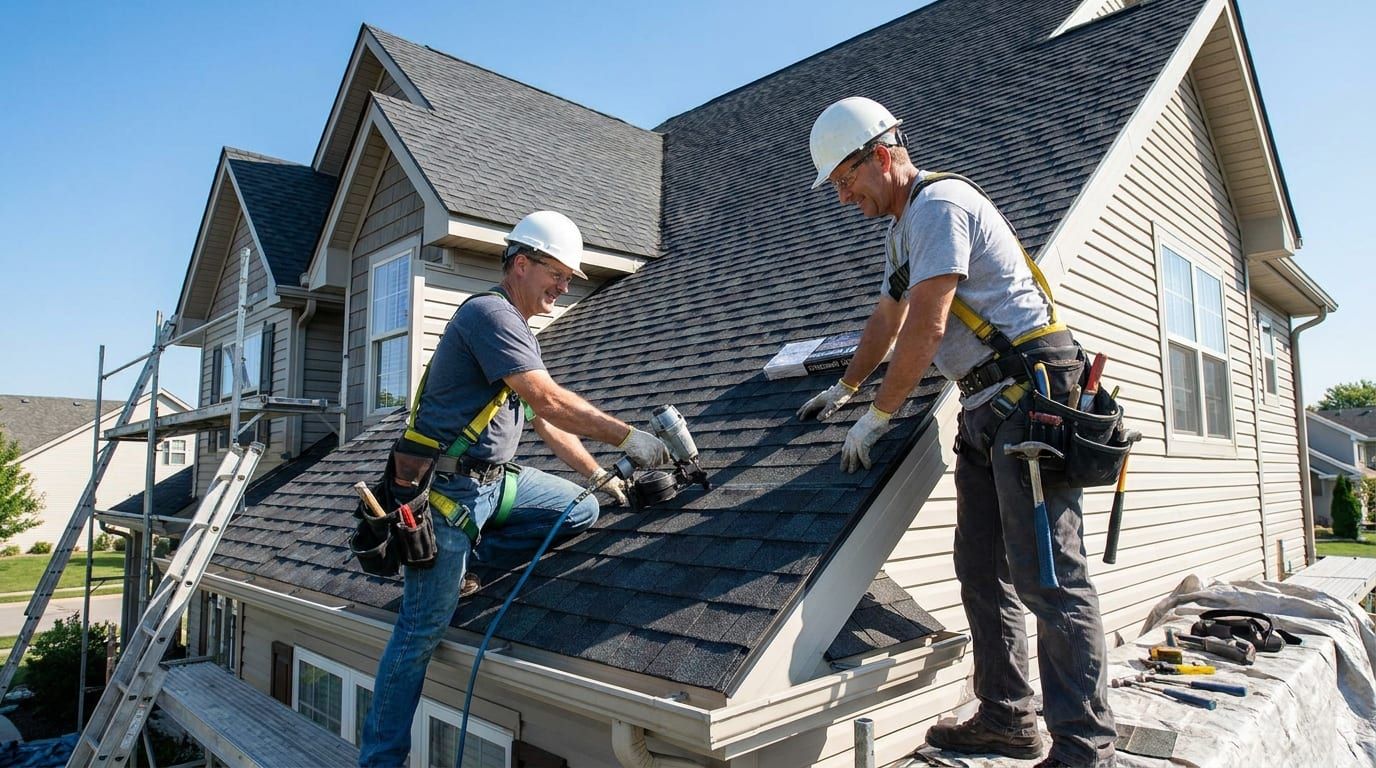
A roof inspection tells you what your roof actually needs before you spend money on it: a repair, a restoration, or a full replacement. It is also the first step for an insurance claim after hail or wind, and a smart check before you buy or sell a home.
Roof Restore Buddy matches you with independent local roofers, and many inspect for free when you are considering repair or replacement work. If you want an opinion from someone with nothing to sell, you can also pay an independent inspector. Both options are covered below.
How much does a roof inspection cost?
Most paid roof inspections cost $150 to $400. Many roofing contractors inspect for free when you are getting a repair or replacement quote, while independent reports, drone surveys and infrared scans cost more. Typical 2026 prices:
- Free contractor inspection: $0, usually tied to a repair, replacement or insurance claim quote
- Paid inspection by a roofing contractor: about $150 to $350
- Comprehensive inspection with an attic check and a written photo report: about $250 to $500
- Drone inspection: about $100 to $450, and sometimes a low-cost add-on to a standard visit
- Infrared (thermal) moisture scan: about $400 to $600
- Roof certification for a home sale: about $250 to $600
The price rises with roof size, steepness and height, fragile materials such as tile or slate, and how detailed a report you need. Ranges are compiled from published 2026 industry cost data and typical contractor pricing; local rates vary.
Are free roof inspections legit?
Usually, yes. A free inspection is how most roofers earn the chance to quote your job, and a reputable local company will show you photos of what it found. The risk is the unsolicited offer. The Texas Department of Insurance warns that out-of-town scam artists may be the first at your door after a disaster, and some door-to-door crews invent damage, or even cause it, to sell a roof. To protect yourself:
- Book the inspection yourself with a local, licensed roofer rather than saying yes at the door.
- Ask for dated photos of every problem, taken on your roof.
- Get a second opinion, or ask your insurer to inspect, before you sign anything.
- Do not pay a large deposit up front, and walk away from anyone who offers to waive your insurance deductible. In Texas that is illegal.
Our guide on how to spot a bad roofer covers the other warning signs.
What’s included in a roof inspection
A thorough inspection covers the roof surface, everything that passes through it, and the attic underneath. Expect the inspector to check:
- Shingles, tiles or panels: missing, cracked, curling or blistered pieces, granule loss, and hail or wind marks
- Flashing and sealant around chimneys, skylights, vents, pipe boots and walls
- Valleys, ridges, roof edges and drip edge
- Gutters, downspouts and drains, including debris that backs water up under the roof
- Soft or sagging spots that point to damaged decking
- The attic: daylight through the deck, water stains, mold, ventilation and insulation
You should get a written report with photos, an estimate of the roof’s remaining life, and a clear recommendation: leave it, repair it, restore it or replace it. Ask what is urgent and what can wait.
How long a roof inspection takes
Most on-site roof inspections take 45 minutes to two hours. A quick free contractor check can be shorter, while large, steep or complex roofs, attic checks and infrared scans take longer. Ask when you will receive the written report, since that is what an insurer, buyer or second roofer will want to see.
Drone and infrared roof inspections
Drones photograph steep, high or fragile roofs without anyone walking on them, which makes them useful for tall homes, tile roofs and storm surveys. Anyone flying a drone for business needs an FAA Remote Pilot Certificate under Part 107, so ask to see it. A drone cannot check the attic, the deck or how well flashing is sealed, so treat it as part of an inspection, not the whole thing.
Infrared (thermal) cameras pick up temperature differences across the roof that can reveal hidden leaks and trapped moisture. They are most useful on older roofs, when a leak cannot be traced, and on flat or low-slope roofs where water can spread under the surface before it shows inside.
For offices, warehouses and other business buildings, see commercial roof inspections and maintenance programs.
When should you get your roof inspected?
Guidance from NRCA, the National Roofing Contractors Association, calls for inspections twice a year, in spring and fall, and a professional inspection as soon as possible after a major storm. Also get one:
- After hail, high winds or a fallen tree, before you file a claim (see storm damage repair)
- Before you buy or sell a home
- When your insurer asks for one, especially on an older roof
- When you notice leaks, ceiling stains, missing shingles or granules in the gutters
- When an asphalt roof nears 20 years old
In Florida, insurers cannot refuse or non-renew a policy solely because the roof is under 15 years old. For older roofs they must accept an inspection by an authorized inspector, and if it shows at least five years of useful life left, age alone cannot be the reason to refuse coverage.
How Roof Restore Buddy works
Three steps to compare local roofers, with no pressure and no cost to you.
- 1
Tell us about your roof
Answer a few quick questions about your project and ZIP code. Takes under 2 minutes.
- 2
Get matched with local pros
We share your request with up to 4 independent roofing contractors who serve your area.
- 3
Compare free quotes
Compare quotes and reviews side by side, then choose the roofer that’s right for you. No obligation.
Roof Inspection, frequently asked questions
How much does a roof inspection cost?
Most paid roof inspections cost $150 to $400, and roofing contractors often inspect for free when you are getting a repair or replacement quote. A comprehensive inspection with an attic check runs about $250 to $500, a drone inspection about $100 to $450, and an infrared moisture scan about $400 to $600.
What will fail a roof inspection?
Active leaks, soft or rotted decking, sagging, widespread missing, cracked or curling shingles, heavy granule loss, and damaged or missing flashing are the usual reasons. For insurance, a roof near the end of its life can also count against you: insurers inspect roofs when you apply and may charge more or decline coverage based on what they see.
Can I inspect my roof myself?
You can do a useful first check without climbing. Look from the ground, with binoculars if you have them, for missing or damaged shingles and bent flashing, check the gutters for granules, and look in the attic for daylight, stains or damp insulation. NRCA advises homeowners to inspect only from ground level because the fall risk is too great, so leave the roof itself to a professional.
How often should a roof be inspected?
NRCA guidance calls for inspections twice a year, in spring and fall, plus after any major storm. At a minimum, the Texas Department of Insurance suggests hiring a roof inspector every few years to catch issues early, and you should always inspect before buying or selling a home.
Does a 20-year-old roof need to be replaced?
Not always, but a 20-year-old asphalt roof is near the end of its typical 20–25 year lifespan, so it should be inspected closely. If it’s showing widespread wear, replacement is often more cost-effective than ongoing repairs.
What is the 25% rule in roofing?
It is a Florida rule. Under the Florida Building Code, Existing Building, Section 706.1.1, if more than 25% of a roof covering is repaired or replaced within 12 months, the whole roof covering must be replaced to current code. A 2022 state law (Florida Statutes 553.844(5)) exempts roofs built to the 2007 Florida Building Code or later, which only need the repaired portion brought up to code. Outside Florida, check with your local building department.
Related services
Roof Repair
From leaks to missing shingles, get matched with local roofers for fast, affordable repairs.
Learn moreRoof Replacement
A full tear-off and new roof installation, with quotes from independent contractors in your area.
Learn moreStorm & Hail Damage Roof Repair
Wind, hail, and storm damage repair, with contractors who know the insurance process.
Learn moreReady to restore your roof?
Get matched with trusted local roofers and compare free quotes in minutes.